
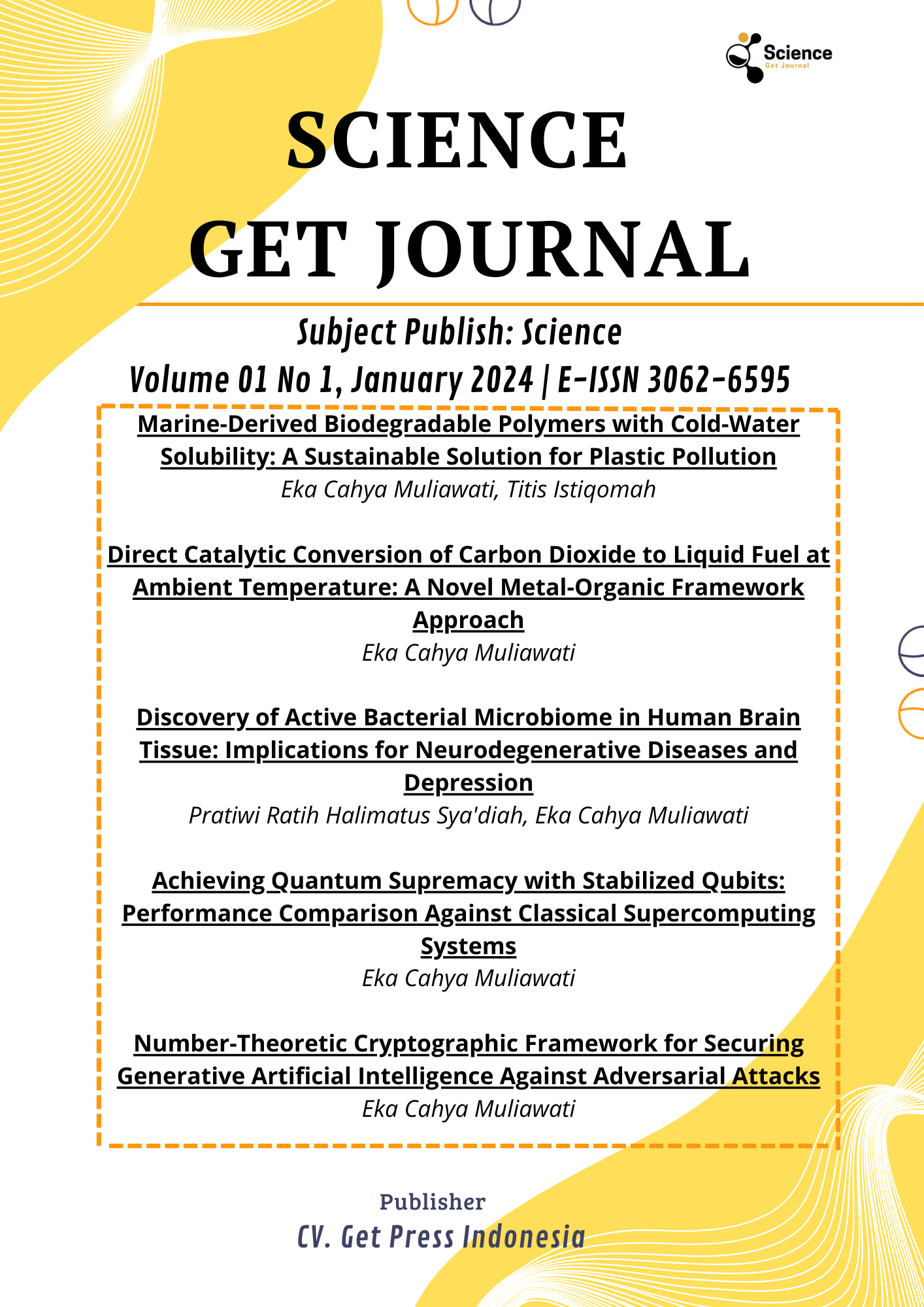
Discovery of Active Bacterial Microbiome in Human Brain Tissue: Implications for Neurodegenerative Diseases and Depression
DOI:
https://doi.org/10.69855/science.v1i1.449Keywords:
Brain microbiome, Gut-brain axis, Neurodegenerative diseasesAbstract
The concept of a sterile human brain has recently been challenged by emerging evidence suggesting the presence of microbial DNA and components within brain tissue. This study aimed to investigate the presence and disease-specific patterns of microbial signatures in human brains affected by Alzheimer’s disease and depression, compared to healthy controls. Using 16S rRNA sequencing on post-mortem brain samples, we detected microbial DNA in all groups, with notable differences in diversity and composition. Alzheimer’s brains exhibited reduced microbial richness and were enriched in genera such as Cutibacterium and Streptococcus, which may contribute to neuroinflammation and amyloid aggregation. Depressive brains showed increased abundance of Eggerthella, potentially influencing neurotransmitter metabolism and systemic inflammatory pathways, while control brains had higher prevalence of Lactobacillus and Bifidobacterium, consistent with neuroprotective roles. These findings support the emerging “brain microbiome” concept and suggest that low-abundance microbial communities may reflect disease-associated processes or interactions via the microbiota-gut-brain axis. While causality and microbial viability remain to be established, the study highlights the potential relevance of brain-associated microbes in neurodegenerative and psychiatric disorders and provides a foundation for future experimental and translational research exploring microbiome-targeted diagnostic and therapeutic strategies.
References
Arabi, T., Alabdulqader, A., Sabbah, B., & Ouban, A. (2023). Brain inhabiting bacteria and neurodegenerative diseases: the “brain microbiome” theory. Frontiers in Aging Neuroscience, 15, 1240945. https://doi.org/10.3389/fnagi.2023.1240945
Capuco, A., Urits, I., Hasoon, J., Chun, R., Gerald, B., Wang, J., Kassem, H., Ngo, A., Abd-Elsayed, A., Simopoulos, T., Kaye, A., & Viswanath, O. (2020). Current perspectives on gut microbiome dysbiosis and depression. Advances in Therapy, 37, 1328–1346. https://doi.org/10.1007/s12325-020-01272-7
Eicher, T., & Mohajeri, M. H. (2022). Overlapping mechanisms of action of brain-active bacteria and bacterial metabolites in the pathogenesis of common brain diseases. Nutrients, 14, 2661. https://doi.org/10.3390/nu14132661
Góralczyk-Bińkowska, A., Szmajda-Krygier, D., & Kozłowska, E. (2022). The microbiota–gut–brain axis in psychiatric disorders. International Journal of Molecular Sciences, 23, 11245. https://doi.org/10.3390/ijms231911245
Hashimoto, K. (2023). Emerging role of the host microbiome in neuropsychiatric disorders: Overview and future directions. Molecular Psychiatry, 28, 3625–3637. https://doi.org/10.1038/s41380-023-02287-6
Li, Z., Lai, J., Zhang, P., Ding, J., Jiang, J., Liu, C., Huang, H., Zhen, H., Xi, C., Sun, Y., Wu, L., Wang, L., Gao, X., Li, Y., Fu, Y., Jie, Z., Li, S., Zhang, D., Chen, Y., … Hu, S. (2022). Multi-omics analyses of serum metabolome, gut microbiome and brain function reveal dysregulated microbiota-gut-brain axis in bipolar depression. Molecular Psychiatry, 27, 4123–4135. https://doi.org/10.1038/s41380-022-01569-9
Loh, J., Mak, W., Tan, L., Ng, C., Chan, H., Yeow, S., Foo, J., Ong, Y., How, C., & Khaw, K. (2024). Microbiota–gut–brain axis and its therapeutic applications in neurodegenerative diseases. Signal Transduction and Targeted Therapy, 9, 1743. https://doi.org/10.1038/s41392-024-01743-1
Luqman, A., He, M., Hassan, A., Ullah, M., Zhang, L., Khan, M., Din, A., Ullah, K., Wang, W., & Wang, G. (2024). Mood and microbes: A comprehensive review of intestinal microbiota’s impact on depression. Frontiers in Psychiatry, 15, 1295766. https://doi.org/10.3389/fpsyt.2024.1295766
Mitrea, L., Nemeș, S., Szabó, K., Teleky, B., & Vodnar, D. (2022). Guts imbalance imbalances the brain: A review of gut microbiota association with neurological and psychiatric disorders. Frontiers in Medicine, 9, 813204. https://doi.org/10.3389/fmed.2022.813204
Nandwana, V., Nandwana, N., Das, Y., Saito, M., Panda, T., Das, S., Almaguel, F., Hosmane, N., & Das, B. (2022). The role of microbiome in brain development and neurodegenerative diseases. Molecules, 27, 13402. https://doi.org/10.3390/molecules27113402
Needham, B. D., Kaddurah-Daouk, R., & Mazmanian, S. (2020). Gut microbial molecules in behavioural and neurodegenerative conditions. Nature Reviews Neuroscience, 21, 717–731. https://doi.org/10.1038/s41583-020-00381-0
Sherwin, E., Dinan, T. G., & Cryan, J. F. (2018). Recent developments in understanding the role of the gut microbiota in brain health and disease. Annals of the New York Academy of Sciences, 1420, 5–25. https://doi.org/10.1111/nyas.13416
Shandilya, S., Kumar, S., Jha, N., Kesari, K., & Ruokolainen, J. (2021). Interplay of gut microbiota and oxidative stress: Perspective on neurodegeneration and neuroprotection. Journal of Advanced Research, 38, 223–244. https://doi.org/10.1016/j.jare.2021.09.005
Socała, K., Doboszewska, U., Szopa, A., Serefko, A., Włodarczyk, M., Zielińska, A., Poleszak, E., Fichna, J., & Wlaź, P. (2021). The role of microbiota–gut–brain axis in neuropsychiatric and neurological disorders. Pharmacological Research, 105840, 1–16. https://doi.org/10.1016/j.phrs.2021.105840
Suda, K., & Matsuda, K. (2022). How microbes affect depression: Underlying mechanisms via the gut–brain axis and the modulating role of probiotics. International Journal of Molecular Sciences, 23, 1172. https://doi.org/10.3390/ijms23031172
Valles-Colomer, M., Falony, G., Darzi, Y., Tigchelaar, E., Wang, J., Tito, R., Schiweck, C., Kurilshikov, A., Joossens, M., Wijmenga, C., Claes, S., Van Oudenhove, L., Zhernakova, A., Vieira-Silva, S., & Raes, J. (2019). The neuroactive potential of the human gut microbiota in quality of life and depression. Nature Microbiology, 4, 623–632. https://doi.org/10.1038/s41564-018-0337-x
Zhang, H., Chen, Y., Wang, Z., Xie, G., Liu, M., Yuan, B., Chai, H., Wang, W., & Cheng, P. (2022). Implications of gut microbiota in neurodegenerative diseases. Frontiers in Immunology, 13, 785644. https://doi.org/10.3389/fimmu.2022.785644
Zhu, S., Jiang, Y., Xu, K., Cui, M., Ye, W., Zhao, G., Jin, L., & Chen, X. (2020). The progress of gut microbiome research related to brain disorders. Journal of Neuroinflammation, 17, 1705. https://doi.org/10.1186/s12974-020-1705-z
Downloads
Published
How to Cite
Issue
Section
License
Copyright (c) 2026 Pratiwi Ratih Halimatus Sya'diah, Eka Cahya Muliawati

This work is licensed under a Creative Commons Attribution 4.0 International License.